


Training & Development

Human-centered training and development for teams navigating change, uncertainty, and increased pressure.
When you’re responsible for people, you feel it first when something’s off.
Meetings get quieter, decisions take longer, people stop raising problems until they’re already big ones. Even when nothing is “wrong” on paper, engagement and performance start to slip.
Between restructuring, return-to-office friction, and teams running leaner than ever, a lot of what’s slowing people down has less to do with workload and more to do with trust, psychological safety, and whether people feel supported through constant change.
I’m a PCC-credentialed coach and certified Enneagram practitioner, and I design in-person leadership and team training for moments like this. Your team won’t sit through a generic slide deck. We work on your people actually communicate, decide, and handle pressure together.

The Reality Leaders Are Navigating Right Now
Your people might not be saying it, but they’re feeling it.
Even in organizations that aren’t cutting jobs, a lot of employees are bracing for it. Leaders are being asked to deliver results while also managing how anxious their teams are.
You might be noticing:
• High performers pulling back and doing only what’s asked
• Team tension that never gets named, but slows collaboration
• Managers stuck in reaction mode, unsure how to lead clearly through change
If you’re responsible for engagement, alignment, or performance, this probably feels familiar.
Why This Matters Now
20% of employees worldwide were engaged at work in 2025, the lowest level since 2020. (Gallup, State of the Global Workplace 2026)
70% of the difference in team engagement comes down to the manager. (Gallup, State of the American Manager)
Manager engagement fell from 27% to 22% in a single year. (Gallup, 2026)
That's why so much of my training focuses on managers.
They're carrying their own stress and their team's at the same time.
How My Training and Development Supports Teams
Every session is built around what your team actually needs.
Whether the focus is leadership development, workplace communication, stress reduction, or navigating organizational change,
I work with the human dynamics that determine how work actually gets done.
Many teams start with Enneagram team training. It gives people a shared language for how each person handles stress, conflict, and communication, so they stop taking each other’s differences personally and start working with them.
Each session includes:
• Individual reflection paired with facilitated group discussion
• Real-world workplace scenarios tailored to your team’s reality
• Practical tools and shared language that support lasting behavior change
People often walk in unsure and leave saying, “I didn’t expect this to be so helpful.”
Training Topics That Move Teams Forward
Depending on your goals, sessions may explore:
Enneagram for Teams : understanding how each person works, communicates, and handles pressure.
Navigating Uncertainty: Building psychological safety through restructuring, return-to-office changes, and other shifts.
Communication That Holds Under Pressure
Leadership That’s Human and Effective, even without clear answers
Conflict That Moves Work Forward, not just gets smoothed over
Stress Reduction That Actually Works, tailored to your team
Rebuilding Trust After Burnout or Turnover
Collaboration and Interdependence, shifting from siloed to aligned
Identity and Difference at Work, honoring perspectives without creating division
Each session is designed around what your team is facing right now, including the things nobody’s saying out loud.

The Frameworks Behind the Work (Without the Jargon)
I use the Enneagram and the foundations within the Energy Leadership Index,
but the session isn’t a lecture on either one.
They help teams see patterns they’re already living with, like how each person reacts under stress, where communication breaks down, and which habits get in the way of working together.
Nobody gets put in a box. Once people can see the patterns, they start doing something different with them.
Some organizations choose to extend the impact by pairing training with coaching for leaders, managers, or teams. This isn’t required, but it can accelerate the shift from insight to sustained behavior change.
How It Works
1. Discovery call. We talk about what your team is facing and what you want to be different afterward.
2. Proposal. If it feels like a good fit, I send a proposal outlining the approach, format, and investment.
3. Custom design. Once the proposal is approved, I build the session around your goals and share an outline before anything is final.
4. In-person delivery. I work with teams across New Jersey, New York City, Pennsylvania, and Connecticut, and travel farther when it makes sense. Sessions can be a single session, a half day, a full day, or a multi-session series.
5. Follow-up. We check in on how it landed, and some organizations add coaching for leaders to keep the momentum going.
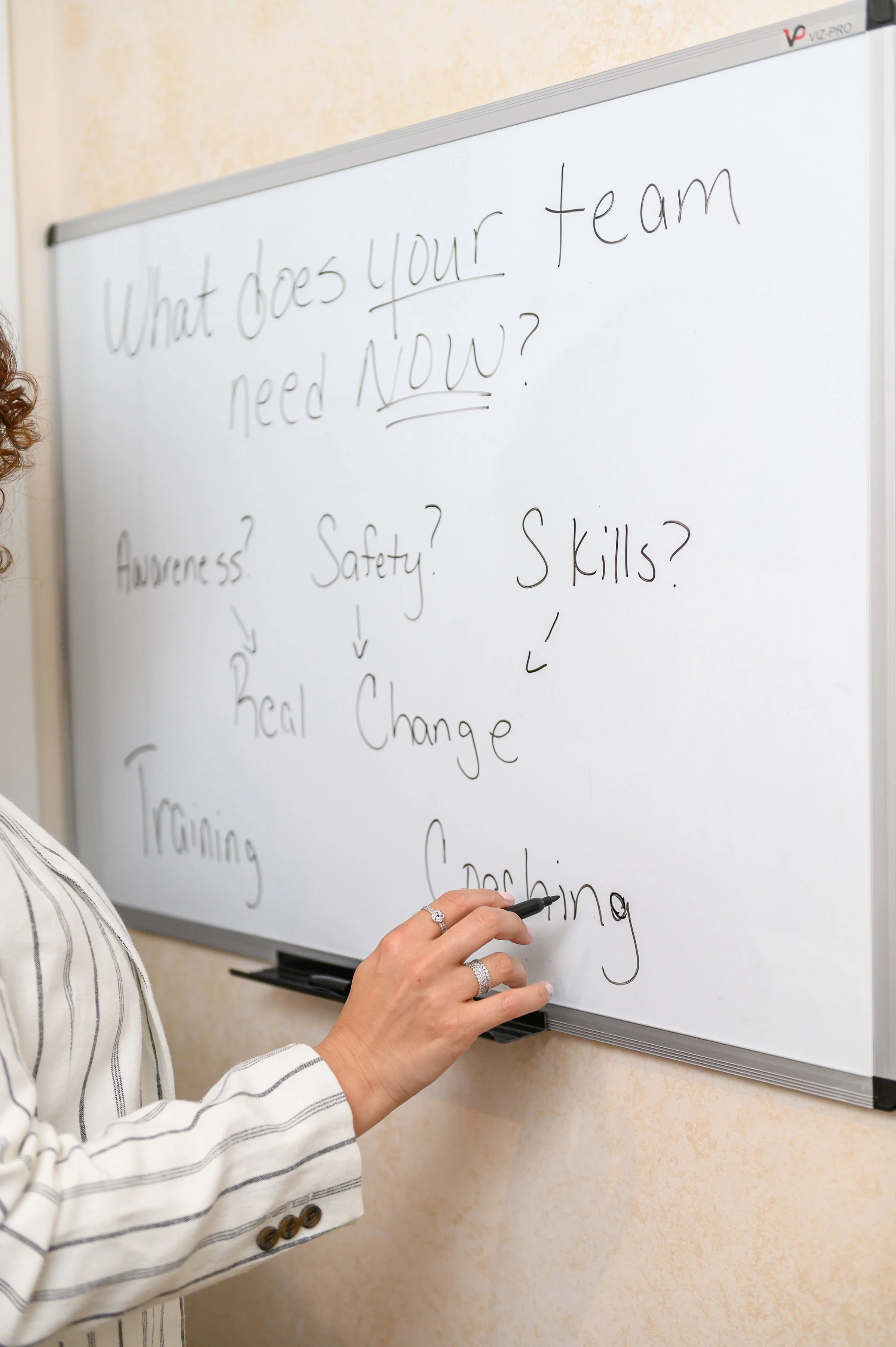
We’ll talk through what your team is dealing with and what kind of training would actually help.
You don’t need a perfectly defined problem to start the conversation.
If things feel off, momentum has slowed, or your people seem stretched thinner than usual, that’s often the right moment to reach out.
We’ll talk through what your team is dealing with and what kind of training would actually help.
Planning a conference, association meeting, or community event instead? Take a look at Speaking & Workshops.
In Their Own Words
Articles you may enjoy:






Curious where stress is costing you?
Start with the stress response quiz, or sign up for thoughtful reflections on work, stress, and the inner experience of carrying a lot.